Generative-AI Recruitment Platform
Role: AI Solutions Architect
Client: An AI-powered recruitment platform
The Challenge
As the platform moved to adopt Generative AI across its hiring and talent workflows, it lacked a structured approach to model selection, prompt design, and governance — leaving AI outputs inconsistent and raising concerns around bias, fairness, and explainability.
The Solution
- Defined a GenAI adoption strategy mapping foundation-model use cases to specific talent workflows
- Built an orchestration layer that applies prompt validation and safety guardrails before invoking any model
- Used Amazon Bedrock foundation models for text tasks — job-description generation and explainable resume scoring
- Integrated AWS Nova Sonic for real-time, AI-led voice interviews with transcription and contextual analysis
- Established responsible-AI governance with human-in-the-loop review, centralized logging, and audit trails
- Wrapped delivery in DevSecOps validation pipelines to keep releases safe and consistent
Key Outcomes
Technologies Used
Project Overview
An AI-powered recruitment platform wanted to bring Generative AI into its hiring workflows — job-description creation, resume screening, and early-stage interviews. Automation tools already existed in the market, but the platform had no structured way to adopt GenAI responsibly. Which models fit which task? How do you keep prompts consistent? How do you prove an AI-assisted hiring decision was fair and explainable?
I led a consulting-driven engagement to answer those questions and stand up the architecture behind them. The result is a globally accessible GenAI recruitment platform with transparent, governed AI at its core.
The Challenge
The platform’s problem wasn’t a lack of automation — it was a lack of trusted automation. Specifically:
- No clear GenAI adoption strategy for talent workflows
- Difficulty selecting suitable foundation models for HR-specific tasks
- Inconsistent AI outputs caused by unstructured, ad-hoc prompts
- Real concerns around bias, fairness, and explainability in hiring
- No responsible-AI policy governing AI-assisted decisions
Manual processes were slow, but the deeper issue was enabling GenAI usage that recruiters and candidates could actually trust.
Solution: GenAI Architecture
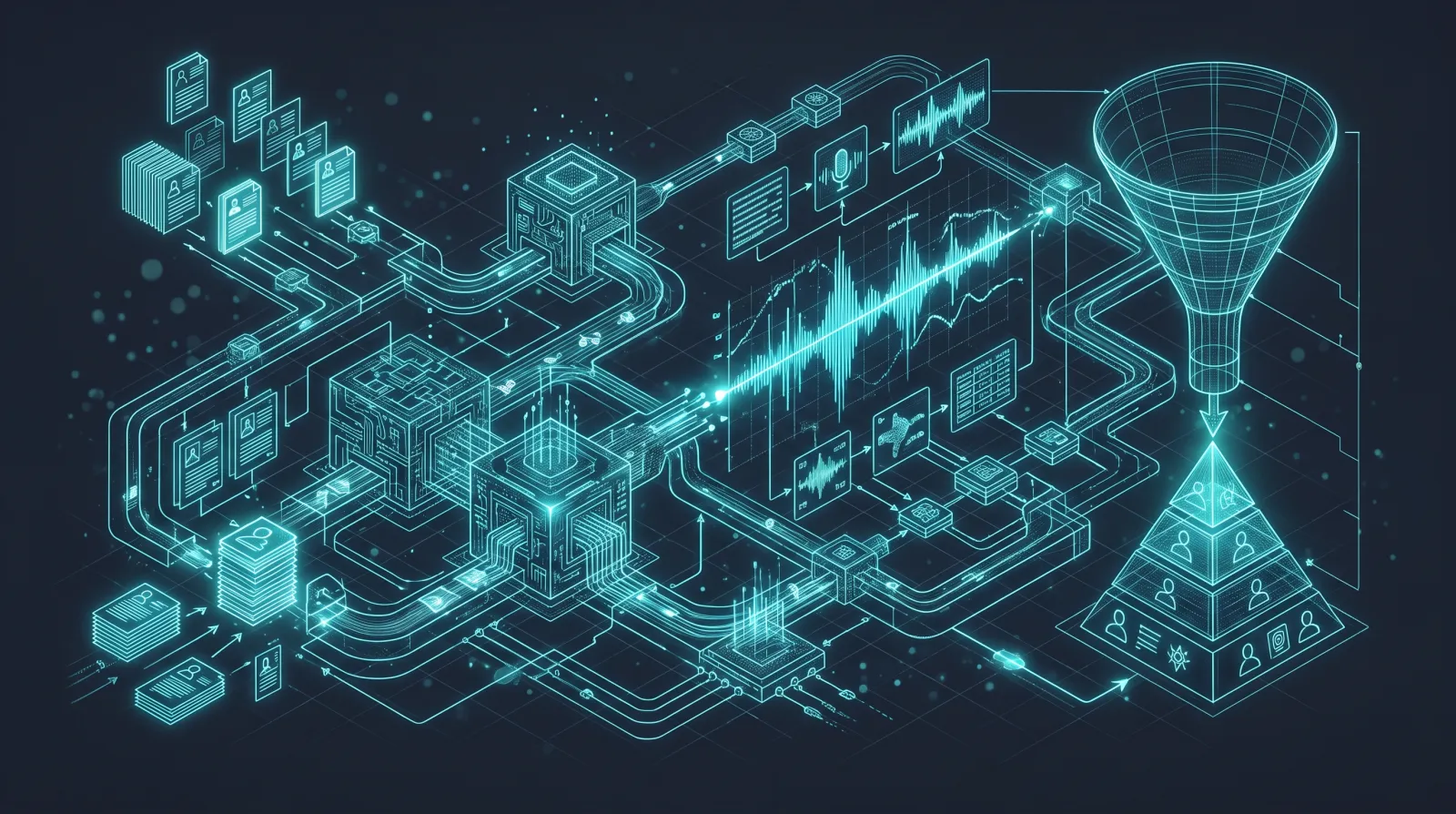
I designed an architecture where every AI interaction flows through a governed orchestration layer before it ever reaches a model — so guardrails, validation, and auditing are structural, not bolted on afterward.
Orchestration and Guardrails
User requests route through a central orchestration layer that applies prompt validation and safety guardrails before invoking any foundation model. This is where consistency and responsible-AI controls live: structured prompts replace ad-hoc ones, and unsafe or out-of-policy requests are caught up front. Text tasks are routed to Amazon Bedrock; real-time voice tasks go to AWS Nova Sonic.
Job-Description Generation
Foundation models on Amazon Bedrock generate role-specific job descriptions from structured prompts, which keeps output consistent and reduces bias in language. Recruiters review and refine every draft before it publishes — the model drafts, the human decides.
Resume Intelligence Engine
The screening engine applies semantic analysis to parse and rank resumes against role requirements. Scoring is explainable rather than a black box, so recruiters can see why a candidate ranked where they did. This cuts screening time while keeping the evaluation defensible.
AI-Led Voice Interviews
AWS Nova Sonic powers real-time, voice-based early-stage interviews. Candidate responses are transcribed and contextually analyzed, giving every candidate a consistent, scalable, and auditable interview experience instead of one that varies by interviewer availability or mood.
Governance and Responsible AI
Application logs and metrics feed centralized monitoring, giving full visibility into AI interactions for auditing and continuous improvement. Human-in-the-loop review stays in the critical path for consequential decisions, and responsible-AI guidelines enforce ethical boundaries. DevSecOps validation pipelines keep releases safe and consistent.
Results
The engagement delivered measurable impact across the hiring funnel:
- Screening efficiency: Per-candidate screening time dropped from roughly 45 minutes of manual interviewing to about 12 minutes with AI-led resume parsing and voice interviews — a 73% reduction, or 3x faster screening.
- Job-description automation: 90% of job descriptions are now auto-generated, improving both consistency and recruiter productivity.
- Interview load: Manual early-stage interviews fell by 40%, freeing recruiters to focus on high-value conversations.
- Cost: A total-cost-of-ownership analysis put the AWS-powered solution at roughly 43% below the estimated annual cost of the equivalent on-premises workflow — and the on-prem number still left a capability gap the AI solution closed.
- Candidate experience: Structured AI interactions produced fairer, more consistent evaluations across every applicant.
Key Learnings
- Governance is architecture, not policy. Routing every request through an orchestration layer with validation and guardrails made responsible AI a structural property of the system — far more reliable than a document nobody reads.
- Match the model to the task. Text generation and explainable scoring belong on one class of foundation model; real-time voice belongs on another. Deliberate model selection beats forcing one model to do everything.
- Keep the human in the loop where it counts. The biggest trust wins came from letting AI draft and rank while recruiters retained the final call on consequential decisions.
- Explainability sells adoption. Recruiters trusted the resume engine because they could see the reasoning behind a score — opacity would have stalled the whole rollout.
Interested in similar results?
Let's discuss how I can help your organization achieve its goals.
Get in Touch