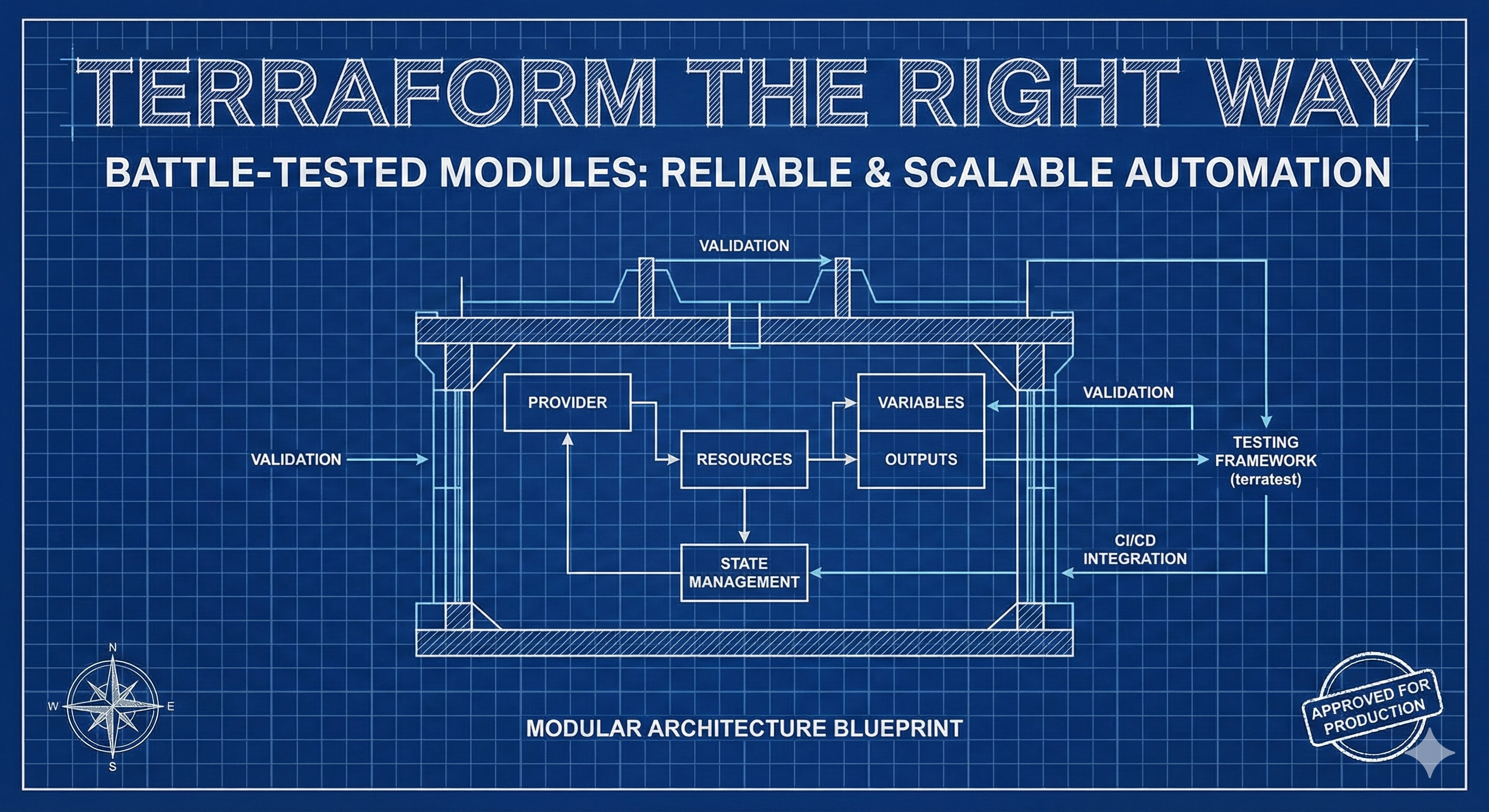
Terraform Modules The Right Way
Introduction
- Terraform is a powerful tool for managing infrastructure as code.
- This article outlines best practices for designing Terraform modules and automating testing for Terraform.
Modules
- A module is a container for multiple resources that are used together.
- Key considerations while designing Terraform modules include:
- breaking down complex modules into standalone submodules
- including a README.md, CHANGELOG.md, versions.tf, variables.tf, and outputs on each module
- using namespaces for resources
- locking down Terraform and provider versions.
Automated Testing for Terraform
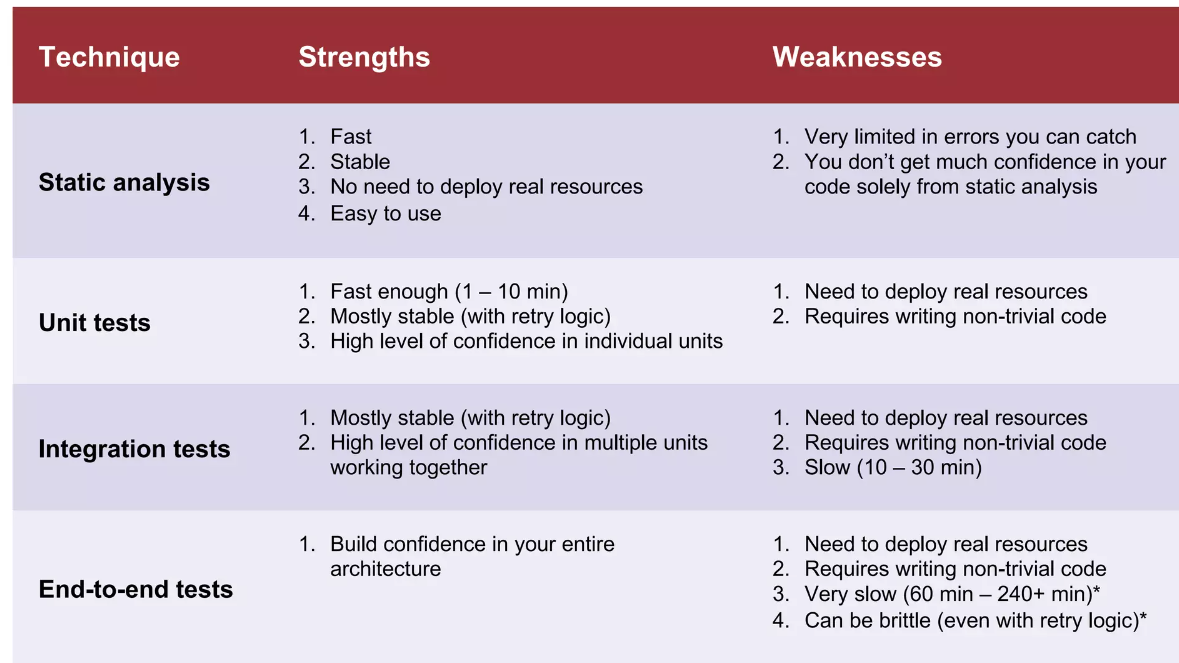
- Terraform testing can be broken down into several types: static analysis, unit tests, integration tests, and cleanup tests.
- Best practices for Terraform testing include:
- using remote state with versioning and locking
- using workspaces for multiple environments
- never saving TF state files in git
- including tests for each module
- adding an examples folder to use modules
- including in git pre-commits
- including in CI workflows.
What are Modules?
A module is a container for multiple resources that are used together. You can use modules to create lightweight abstractions, so that you can describe your infrastructure in terms of its architecture, rather than directly in terms of physical objects.
Key Considerations while designing terraform module.
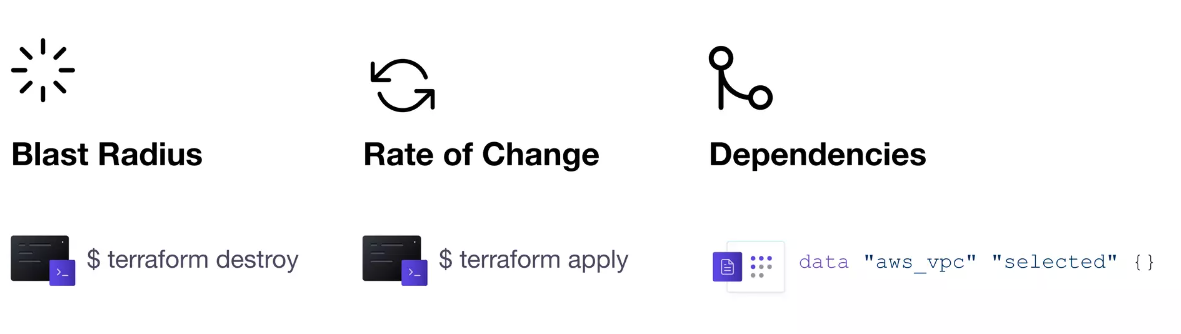
Terraform Module Structure
variables.tf: Module inputs
outputs.tf: Outputs of module and other modules that can use
README.md: Module documentation and use cases
CHANGELOG.md: Change logs and upgrade guides
examples: Use cases and examples for module usage
tests: for writing go tests with terratests
submodule: breakdown the complex module
$ tree complete-module/
.
├── README.md
├── main.tf
├── variables.tf
├── outputs.tf
├── ...
├── modules/
│ ├── nestedA/
│ │ ├── README.md
│ │ ├── variables.tf
│ │ ├── main.tf
│ │ ├── outputs.tf
│ ├── nestedB/
│ ├── .../
├── examples/
│ ├── exampleA/
│ │ ├── main.tf
│ ├── exampleB/
│ ├── .../
Module releases
Use semantic versioning to release module.
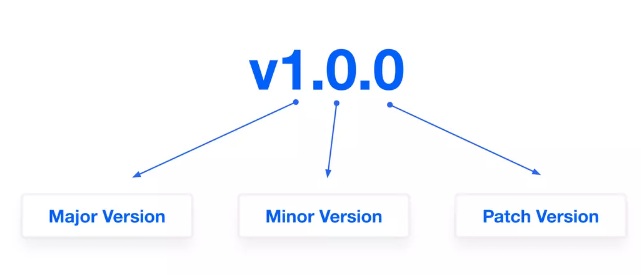
MAJOR: when you make incompatible API changes
MINOR: when you add functionality backward compatible
PATCH : when you make backward-compatible bug fixes
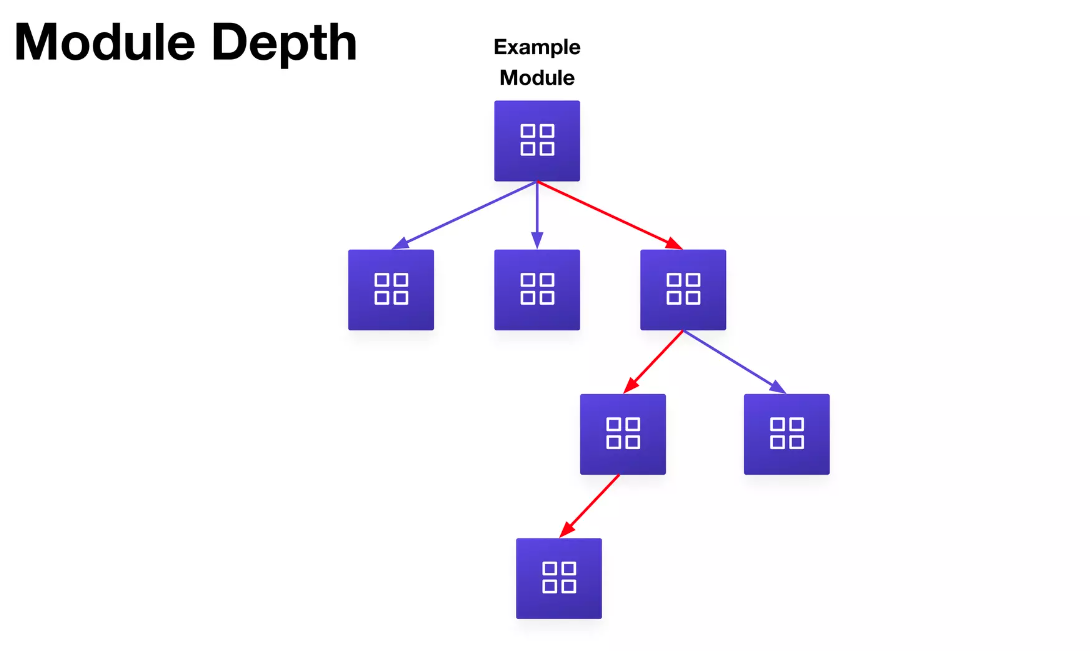
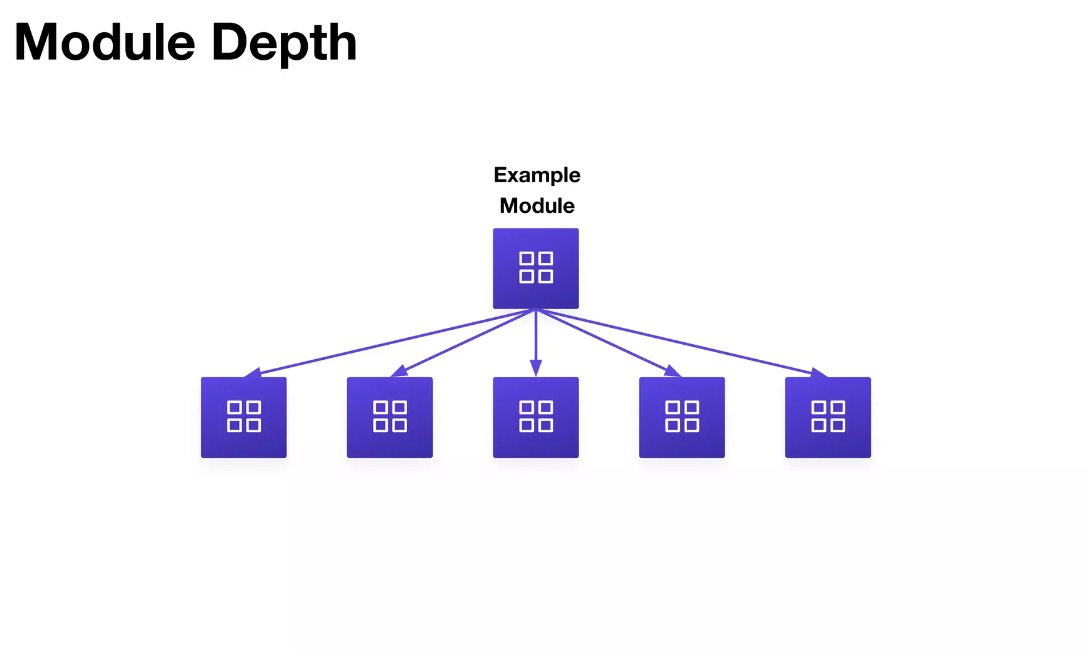
Module destructuring
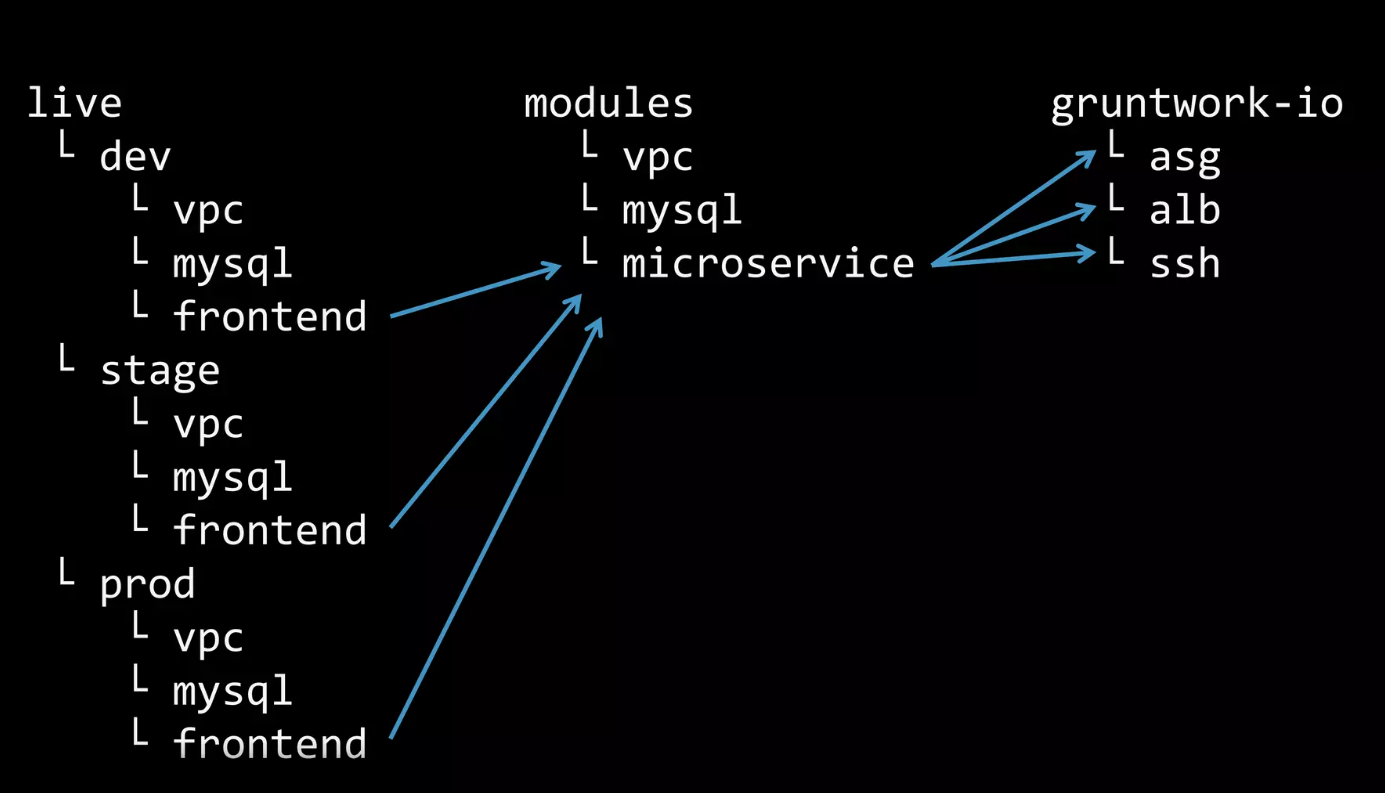
Module Creation - Recommended Pattern | Terraform | HashiCorp Developer
Monolithic Terraform Issues
- one/several huge files
- hard to find/debug
- guess work
- slower development cycles
Best Practices while creating a module
- Include
README.md,Changelog.md,versions.tf,variables.tfandoutputson each modules. - Breakdown complex modules into standalone
submodules - Namespace all your resources.
- separate modules, tests.
- Lockdown terraform and provider versions.
TF_PLUGIN_CACHE_DIR="$HOME/.terraform.d/plugin-cacheto reuse caches- Use
nullattribute when the field will be empty
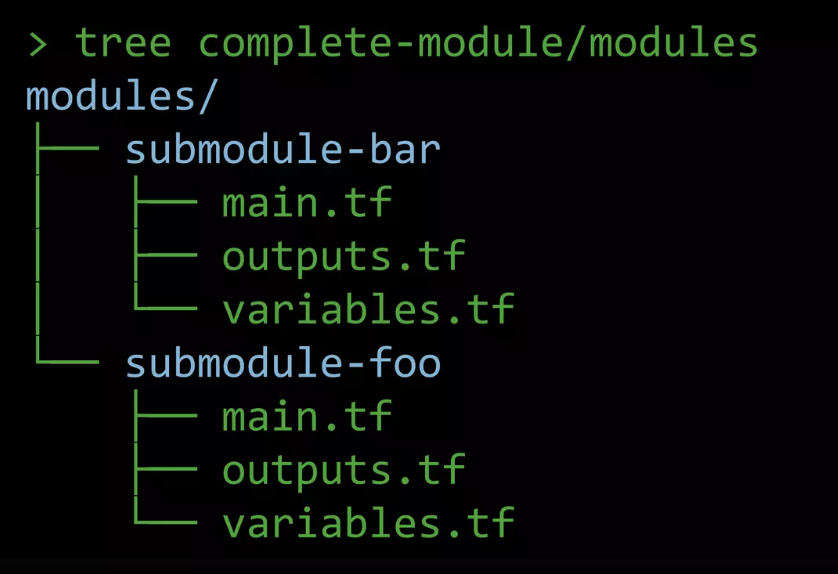
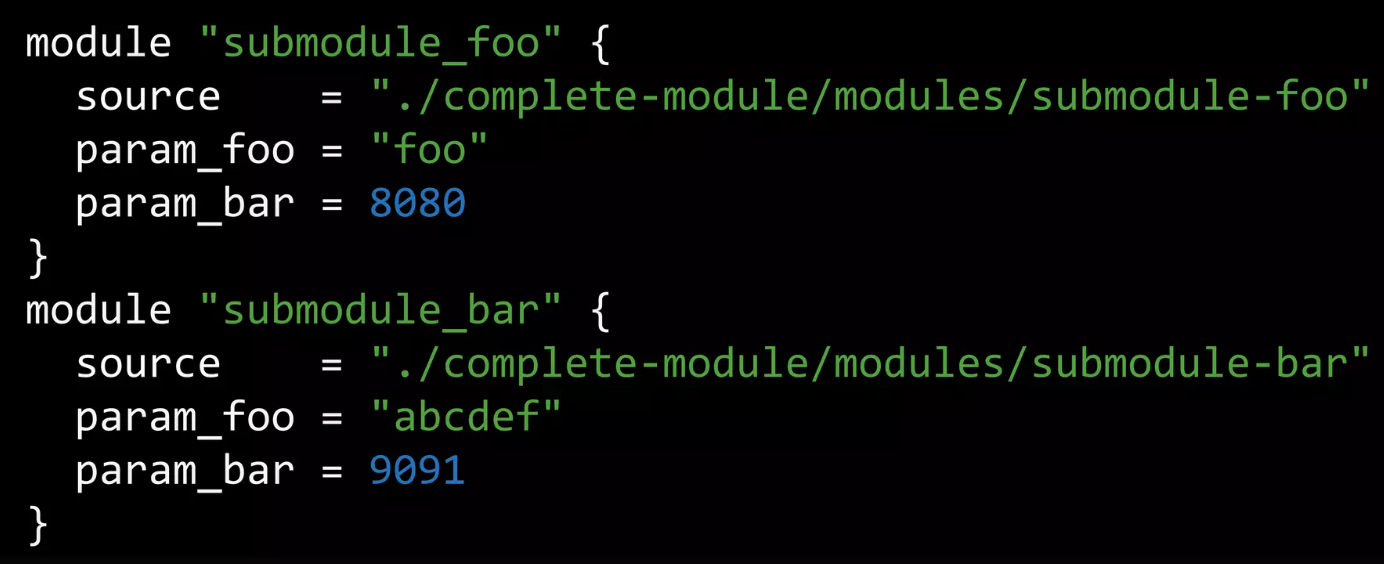
- Include tests for each module.
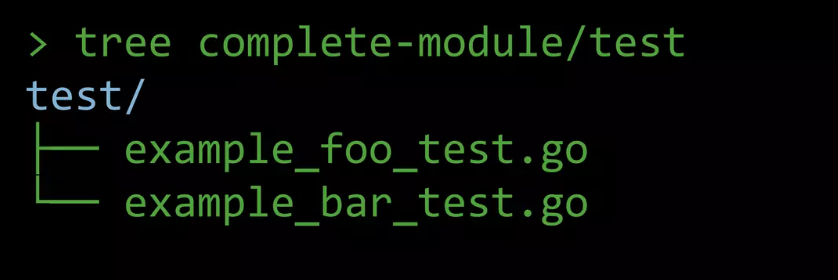
- Add an examples folder to use modules.
Automated testing for Terraform

Test types
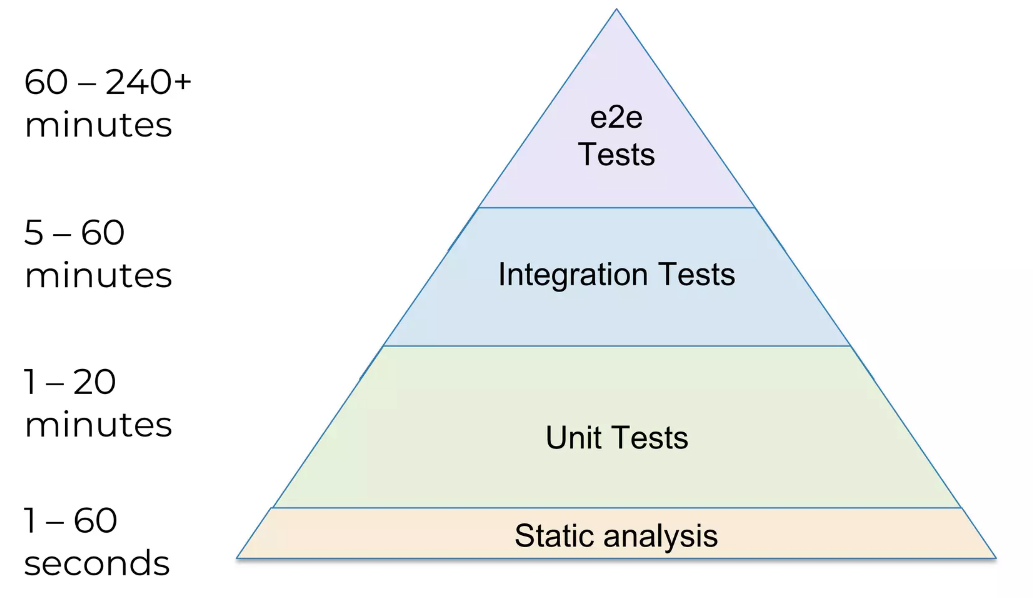
- Static analysis
- Compiler / parser / interpreter
terraform validate- VS Code:
- Linter
- conftest
- terraform_validate
- tflint
- Dry run
- terraform plan
- hashicorp sentinel
- terraform-compliance
- Compiler / parser / interpreter
- Unit Tests
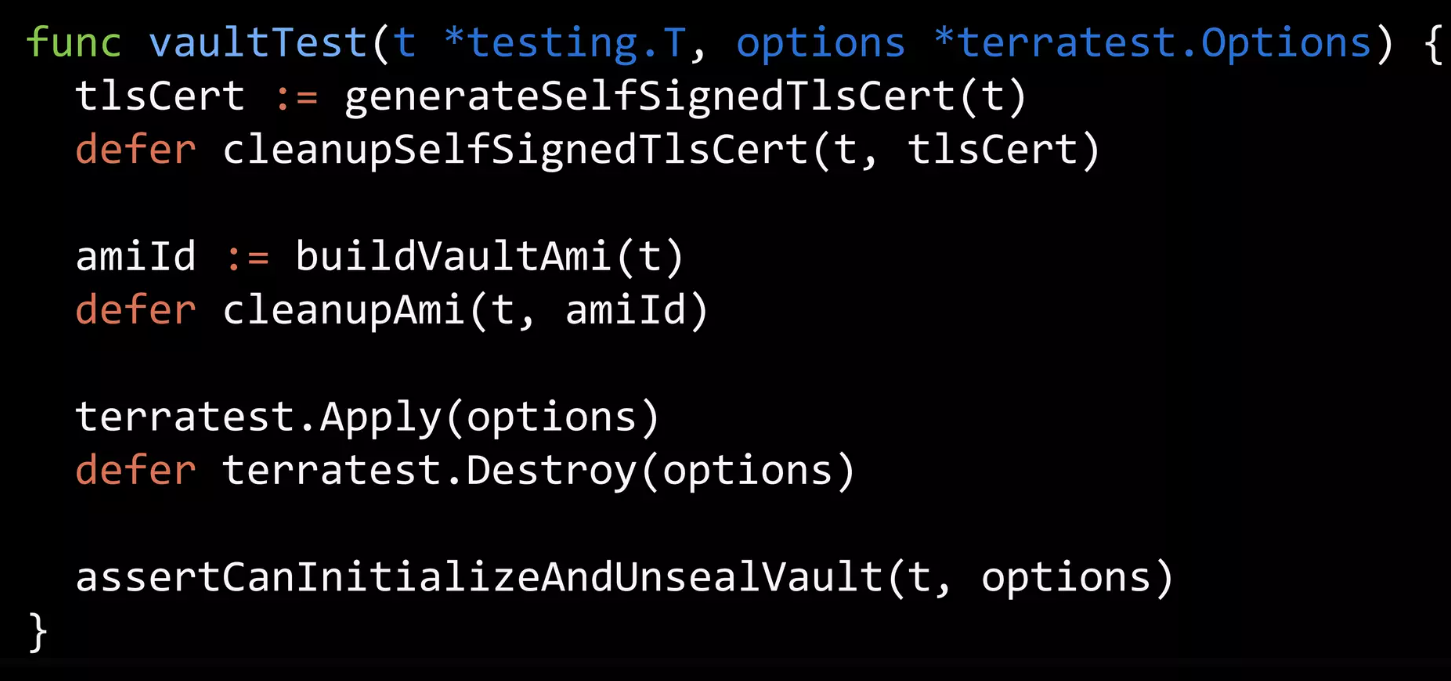
There is no pure unit testing for infrastructure code.
Terratest
deploy and undeployExample : https://github.com/gruntwork-io/infrastructure-as-code-testing-talk- Deploy
- Validate
- Undeploy
- Other ways to validate
- Web services: web requests
- server: terratest ssh package
- cloud: terratest, cli ,api
- DB: SQL queries
- Integration
- test parallelism
- test stages
- test retries
- CleanUp
- cloud-nuke
- aws-nuke
Terraform Best Practices
– Use remote state with versioning and locking; – Use workspace for multiple environments; – Use for_each instead of count if it’s possible; – Never save TF state files in git, they can contain sensitive information in plain text format; – Use modules for code reuse (DIY);
Integrating with workflows
- Include in git precommits
- https://github.com/antonbabenko/pre-commit-terraform
checkovrequired forcheckovhook.terraform-docsrequired forterraform_docshook.terragruntrequired forterragrunt_validatehook.terrascanrequired forterrascanhook.TFLintrequired forterraform_tflinthook.TFSecrequired forterraform_tfsechook.infracostrequired forinfracost_breakdownhook.jqrequired forterraform_validatewith-retry-once-with-cleanupflag, and forinfracost_breakdownhook.tfupdaterequired fortfupdatehook.hcleditrequired forterraform_wrapper_module_for_eachhook.env0to run terraform and terragrunt workflows
- https://github.com/antonbabenko/pre-commit-terraform
- Include in CI workflows
Demo
Example : https://github.com/ashokpokharel977/terraform-aws-vpc
DevOps production readiness checklist: https://gruntwork.io/devops-checklist/
Conclusion
- Terraform is a powerful tool, but it must be used correctly to be effective.
- By following these best practices for designing Terraform modules and automating testing, you can ensure that your infrastructure will be reliable and secure.
References
https://developer.hashicorp.com/terraform/tutorials/modules/pattern-module-creation
https://www.slideshare.net/TomStraub5/developing-terraform-modules-at-scale-hashitalks-2021
https://www.ybrikman.com/writing/2017/10/13/reusable-composable-battle-tested-terraform-modules/
https://github.com/adexltd/sparrow-sms/blob/main/.pre-commit-config.yaml
https://www.slideshare.net/AmiMahloof/terraform-modules-restructured-217430888
https://developer.hashicorp.com/terraform/tutorials/modules/pattern-module-creation
https://github.com/gofireflyio/aiac
https://github.com/gruntwork-io/infrastructure-as-code-testing-talk
https://developer.hashicorp.com/terraform/language/modules/develop/structure
https://gruntwork.io/devops-resources/
https://blog.gruntwork.io/terraform-tips-tricks-loops-if-statements-and-gotchas-f739bbae55f9